
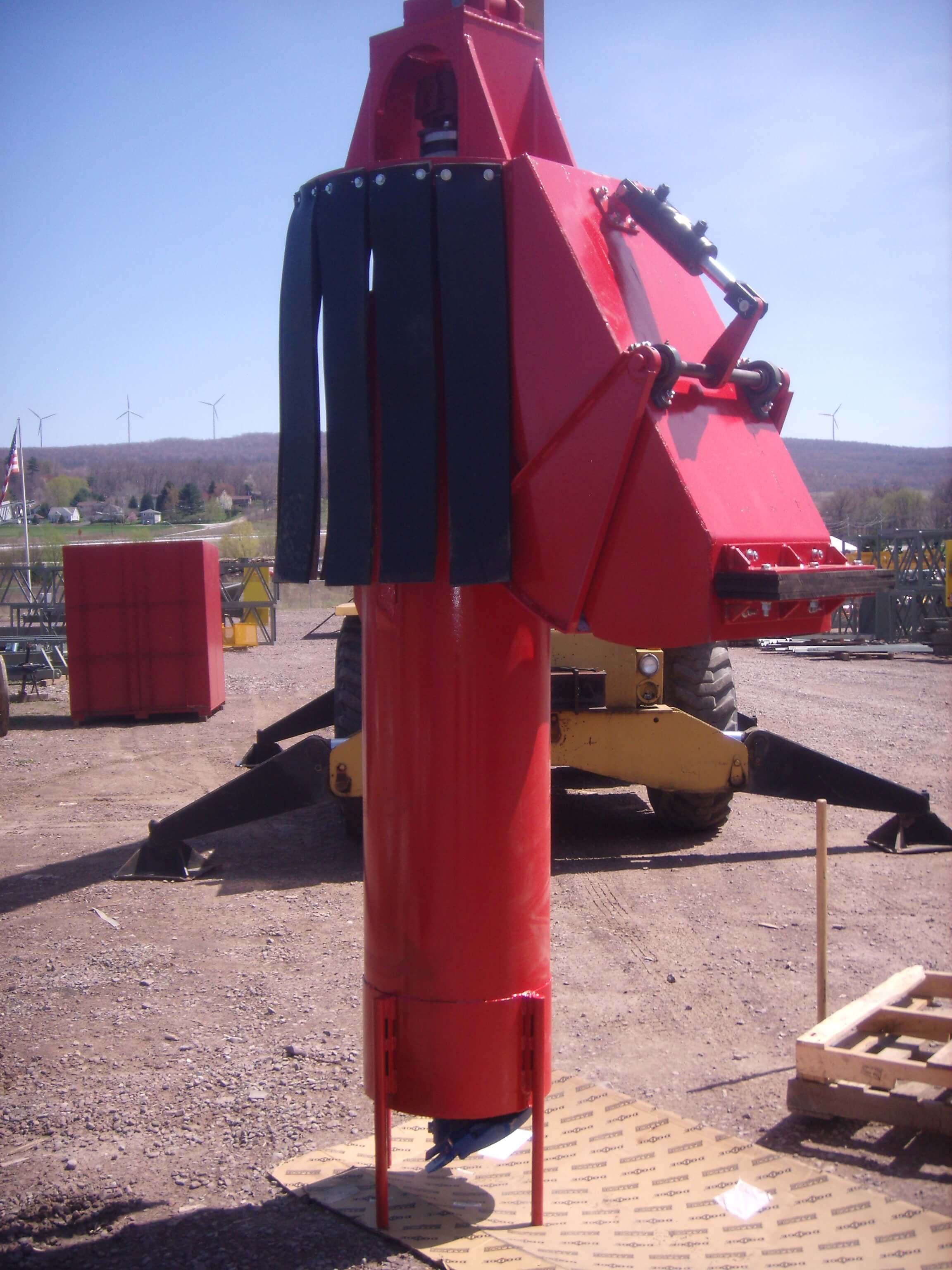
Auger Sampling Systems
McLanahan Auger Sampling Systems
Automated Sampling from Bulk Material Streams
McLanahan Auger Sampling Systems are designed to collect representative samples from bulk material streams for laboratory analysis, quality control, process monitoring and material characterization.
Auger sampling uses a rotating screw-type sampling mechanism to extract material from the process stream. The system can be configured to collect samples from suitable material-handling points, stockpiles, bins, hoppers and other bulk-material applications.
By providing controlled and repeatable sample collection, Auger Sampling Systems can reduce dependence on manual sampling and improve consistency in the sampling process.
How Auger Sampling Systems Work
An Auger Sampler uses a rotating auger to collect material from the selected sampling location.
As the auger rotates, material enters the sampling mechanism and is transported through the auger to a designated sample discharge point.
The collected sample can then be transferred to additional sample preparation equipment or directly to a sample collection container, depending on the application.
A typical sampling arrangement can be:
Bulk Material → Auger Sampler → Sample Discharge → Secondary Sampling / Crushing / Division → Final Sample
The actual configuration depends on the material characteristics, sampling location, required sample quantity and laboratory requirements.
Representative Sampling
Obtaining a representative sample is essential when laboratory results are used to determine the quality, composition or characteristics of bulk material.
An appropriately designed Auger Sampling System helps provide controlled sampling from the selected material stream while reducing variability associated with manual sampling.
Important sampling considerations include:
-
Material segregation
-
Particle size distribution
-
Bulk density
-
Moisture content
-
Material flow characteristics
-
Material composition
-
Sampling frequency
-
Required sample mass
The sampling system should be designed around the characteristics of the material and the required level of sampling accuracy.
Automated Sampling
Auger Sampling Systems can be automated to collect samples according to a predetermined sampling schedule.
The system can be integrated with plant controls to operate automatically and collect samples based on:
-
Time
-
Tonnage
-
Production quantity
-
Batch
-
Process conditions
Automation can provide consistent sampling frequency while reducing operator involvement.
Sample Collection
The Auger Sampler transfers the collected material to a designated discharge point.
The sample can be directed to:
-
A sample collection container
-
A secondary sampler
-
A crusher
-
A sample divider
-
A laboratory sample preparation system
The final arrangement is selected according to the required sample preparation process.
Secondary Sampling
When the initial auger sample is larger than the quantity required for laboratory analysis, secondary sampling can be incorporated.
A secondary sampler reduces the sample quantity while maintaining representative material characteristics.
Multiple sampling stages may be used when a large bulk-material stream must ultimately be reduced to a small laboratory sample.
Sample Crushing and Size Reduction
Some applications require the collected material to be reduced in particle size before final sample division.
A crusher can be incorporated into the sample preparation system to reduce the sample to the required particle size.
Crusher selection depends on:
-
Maximum particle size
-
Material hardness
-
Material abrasiveness
-
Required product size
-
Sample capacity
Sample Division
After sample crushing or size reduction, a Sample Divider can be used to produce smaller representative portions.
Proper sample division helps ensure that the final laboratory sample continues to represent the original material.
The divider should be selected according to the material characteristics, particle size and required final sample mass.
Sampling Frequency
Sampling frequency should be established according to the variability of the material and the purpose of sampling.
Sampling can be scheduled based on:
-
Time
-
Tonnage
-
Production volume
-
Batch
-
Process conditions
The appropriate number and size of samples depend on the required analytical accuracy and the variability of the material.
Applications
McLanahan Auger Sampling Systems can be used in:
-
Mining
-
Mineral processing
-
Coal processing
-
Aggregates
-
Industrial minerals
-
Bulk material handling
-
Stockpile sampling
-
Bin and hopper sampling
-
Quality control
-
Process monitoring
-
Material characterization
-
Laboratory sample preparation
-
Production accounting
Typical Materials
Auger Sampling Systems can be configured for a variety of bulk materials, including:
-
Ores
-
Coal
-
Minerals
-
Aggregates
-
Sand
-
Industrial minerals
-
Concentrates
-
Other bulk solid materials
The final system configuration depends on the physical and flow characteristics of the material.
Key Features & Benefits
-
Automated material sampling
-
Controlled and repeatable sample collection
-
Reduced manual sampling requirements
-
Consistent sampling frequency
-
Suitable for selected bulk-material sampling points
-
Sample transfer to downstream preparation equipment
-
Optional secondary sampling
-
Optional sample crushing
-
Optional sample division
-
Integration with plant control systems
-
Improved operator safety
-
Suitable for laboratory sample preparation
-
Configurable according to material characteristics and sampling requirements
Factors Affecting Auger Sampler Selection
The correct Auger Sampling System depends on several material and process parameters, including:
-
Material type
-
Bulk density
-
Maximum particle size
-
Particle size distribution
-
Moisture content
-
Material hardness
-
Material abrasiveness
-
Material flow characteristics
-
Sampling location
-
Sampling frequency
-
Required sample mass
-
Required final sample size
-
Available installation space
-
Required level of automation
Designing the Right Auger Sampling System
To properly design an Auger Sampling System, the following information is typically required:
-
Material description
-
Bulk density
-
Capacity
-
Maximum particle size
-
Particle size distribution
-
Moisture content
-
Material hardness
-
Material abrasiveness
-
Sampling location
-
Bin, hopper, chute or stockpile configuration
-
Sampling frequency
-
Required increment mass
-
Required final sample mass
-
Required final particle size
-
Available installation space
-
Required level of automation
-
Laboratory requirements
This information allows the sampling system to be configured according to the actual material and process conditions.
McLanahan Auger Sampling Systems from Cube Solutions
As a McLanahan agent, Cube Solutions provides sampling and sample preparation solutions for mining, mineral processing, coal, aggregates and bulk-material applications.
Our team can evaluate your material characteristics, sampling location and laboratory requirements and assist in selecting the appropriate McLanahan Auger Sampling System.
Contact Cube Solutions to discuss your sampling requirements and develop a reliable solution for automated and repeatable bulk-material sampling.