
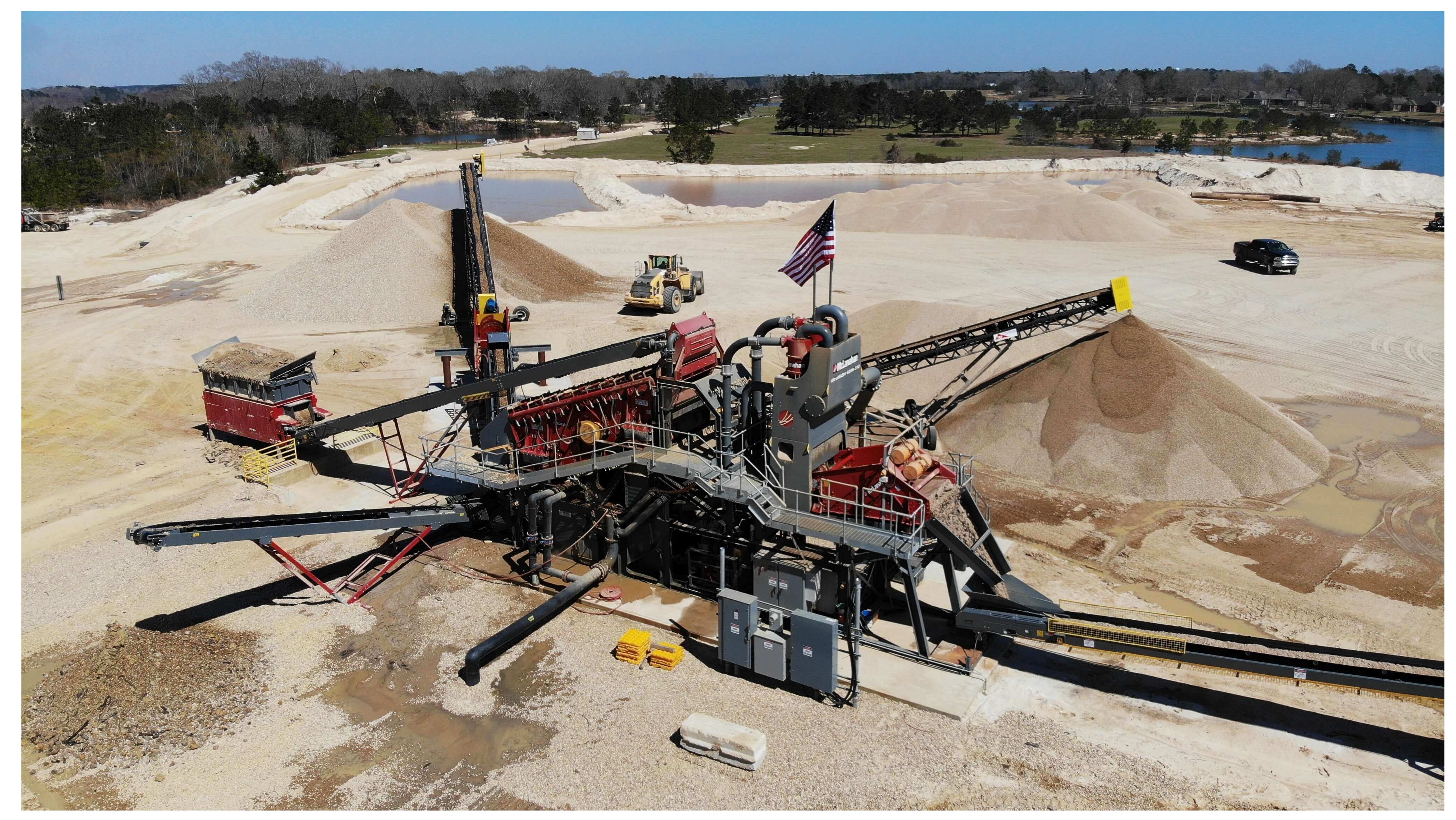
McLanahan UltraWASH Modular Wash Plants
McLanahan UltraWASH Modular Wash Plants
Complete Modular Solutions for Aggregate and Sand Washing
McLanahan UltraWASH Modular Wash Plants are compact, containerized wet-processing systems designed to wash, size, classify and dewater aggregate and sand products.
The UltraWASH combines McLanahan's proven washing equipment into pre-engineered modules that are delivered to the site almost fully assembled. This allows for rapid installation, shorter project lead times and the flexibility to relocate or reconfigure the plant when production requirements or deposits change.
Depending on the configuration, an UltraWASH plant can produce up to five products, including three clean aggregate products and two washed sand fractions.
How UltraWASH Modular Wash Plants Work
UltraWASH modules are transported to the site in shipping containers.
Once on site, the pre-assembled modules are lifted into position, walkways are installed where required, and the water and electrical connections are completed.
Depending on the configuration, material is washed, rinsed, sized, classified and dewatered before being discharged as clean, stackable products.
A typical process may include:
Feed Material → Washing → Screening & Sizing → Sand Classification → Dewatering → Final Products
The exact process flow depends on the characteristics of the deposit and the required products.
Up to Five Final Products
One of the major advantages of the UltraWASH is its ability to produce multiple products from a single compact modular system.
Depending on the configuration, the plant can produce:
-
Up to three clean aggregate products
-
Fine washed sand
-
Coarse washed sand
This allows producers to maximize the value recovered from the deposit and meet different customer product specifications.
Washing and Removal of Contaminants
The washing process removes unwanted materials from the aggregate and sand.
Depending on the deposit, these contaminants can include:
-
Clay
-
Silt
-
Dirt
-
Dust
-
Mud
-
Organic material
-
Surface coatings
-
Other deleterious materials
The washing process helps produce cleaner and higher-quality aggregate and sand products.
Screening and Sizing
McLanahan sizing screens separate the washed material into different size fractions.
Accurate sizing allows the plant to produce multiple aggregate products and control the material entering the sand-processing circuit.
Screen configuration and media can be selected according to the application and required product sizes.
Sand Washing and Classification
The sand fraction is processed through a dedicated washing and classification circuit.
Hydrocyclones can be used to separate unwanted fine material from the desired sand fraction and to control the final sand product.
Depending on the application, the plant can incorporate single or multiple washing stages to achieve the required product cleanliness.
Sand Dewatering
After classification and washing, the sand contains a significant amount of process water.
Dewatering Screens remove excess water and produce a stackable final sand product.
The dewatering stage helps:
-
Reduce product moisture
-
Improve material handling
-
Produce stackable sand
-
Reduce water loss
-
Recover usable sand
Modular and Relocatable Design
The modular design is one of the key advantages of UltraWASH.
The individual modules are transported in containers and assembled on site.
When production moves to another location, the modules can be disassembled, transported and installed at the new site.
This can be particularly valuable for:
-
Multiple mining or quarry sites
-
Short-term projects
-
Changing deposits
-
Contract processing
-
Remote sites
-
Operations requiring flexible production capacity
McLanahan notes that modular plants can be moved between sites without duplicating equipment, making them particularly useful for producers operating at multiple locations.
Faster Installation
Because the UltraWASH modules arrive largely pre-assembled, site installation can be significantly faster than constructing a conventional stationary wash plant.
Installation generally involves:
-
Receiving the containerized modules
-
Lifting the modules into position
-
Installing required walkways
-
Connecting water lines
-
Connecting electrical lines
-
Completing commissioning
McLanahan states that the modules can take only a few hours to remove from their containers, position, connect and prepare for operation, depending on the configuration and site conditions.
Flexible Plant Configuration
UltraWASH plants can be configured according to the characteristics of the deposit and the required products.
The configuration can include different combinations of:
-
Washing modules
-
Vibratory Screens
-
Sumps
-
Slurry Pumps
-
Hydrocyclones
-
Dewatering Screens
-
Conveyors
-
Sand blending arrangements
Additional modules can be added or removed when the application or production requirements change.
Integration with Other McLanahan Modular Systems
UltraWASH can be combined with other McLanahan modular processing solutions to create a more complete wet-processing plant.
These can include:
-
UltraCRUSH
-
UltraSCREEN
-
UltraSCRUB
-
UltraSAND
-
UltraFINES Recovery
-
EcoCycle®
-
Other water and tailings management systems
This allows the complete process to be designed around the characteristics of the deposit and the required final products.
Applications
McLanahan UltraWASH Modular Wash Plants are suitable for:
-
Aggregate washing
-
Sand washing
-
Natural sand
-
Manufactured sand
-
Frac sand
-
Gravel
-
Crushed stone
-
Construction materials
-
Quarrying
-
Mining
-
C&D recycling
-
Industrial minerals
Key Features & Benefits
-
Modular containerized design
-
Rapid installation
-
Shorter project lead times
-
Easy transportation between sites
-
Up to five final products
-
Up to three clean aggregate products
-
Fine and coarse washed sand products
-
Integrated washing and sizing
-
Sand classification
-
Sand dewatering
-
Compact footprint
-
Flexible configuration
-
Reduced need for permanent infrastructure
-
Equipment can be added or removed as requirements change
-
Suitable for multiple sites
-
Proven McLanahan washing technology
-
Can be integrated with other McLanahan modular solutions
Plant Performance and Operating Considerations
UltraWASH performance depends on several factors, including:
-
Feed capacity
-
Feed particle size distribution
-
Material type
-
Clay content
-
Silt content
-
Fines content
-
Material density
-
Moisture content
-
Water availability
-
Required product sizes
-
Required product cleanliness
-
Required sand recovery
-
Desired final moisture
-
Classification requirements
-
Washing intensity
Consistent and controlled feeding is important for maintaining product quality, maximizing yield and reducing unnecessary wear and downtime. McLanahan recommends maintaining a consistent feed and avoiding overfeeding or frequent start-stop operation.
Designing the Right UltraWASH Plant
Important information for selecting the appropriate UltraWASH configuration includes:
-
Required capacity (TPH)
-
Feed particle size distribution
-
Bulk density
-
Material type
-
Clay and silt content
-
Fines percentage
-
Required aggregate sizes
-
Required sand sizes
-
Number of final products
-
Required product cleanliness
-
Required sand recovery
-
Product moisture requirements
-
Available water supply
-
Water recycling requirements
-
Available site area
-
Power availability
-
Existing crushing equipment
-
Existing conveying equipment
-
Downstream storage requirements
Material testing may be recommended to determine the optimum washing, screening, classification and dewatering configuration.
McLanahan UltraWASH Modular Wash Plants from Cube Solutions
As a McLanahan agent, Cube Solutions provides modular and integrated solutions for aggregate and sand washing, screening, classification, dewatering and water management.
Our team can evaluate your material, production requirements and final product specifications and assist in selecting the appropriate McLanahan UltraWASH configuration.
Contact Cube Solutions to discuss your aggregate or sand washing project and determine the most suitable UltraWASH Modular Wash Plant for your operation.