
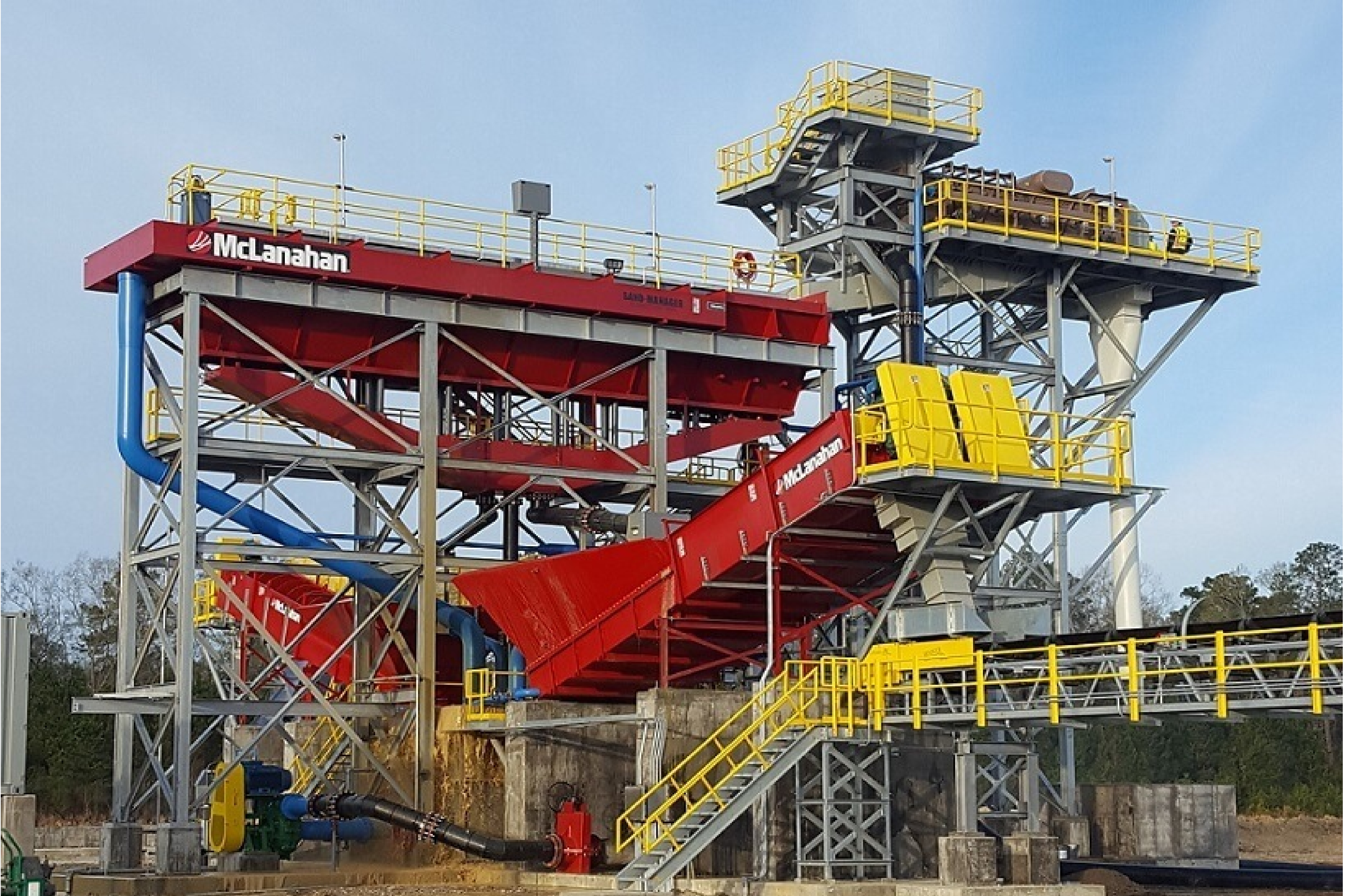
McLanahan Sand Classification Tanks
McLanahan Sand Classification Tanks
Efficient Wet Classification and Sand Separation
McLanahan Sand Classification Tanks are designed to classify and separate sand particles according to their settling characteristics, helping producers achieve consistent particle size distribution and product quality.
Sand classification is an important stage in many aggregate, mining and mineral processing applications where the feed contains a mixture of sand, fine particles and other unwanted material.
By controlling the flow of water and slurry through the classification process, Sand Classification Tanks can separate material into controlled fractions and improve the recovery of valuable sand.
How Sand Classification Tanks Work
A Sand Classification Tank receives a mixture of sand, water and fine particles.
As the slurry enters the tank, the flow conditions allow particles to settle at different rates according to their size, density and settling characteristics.
Coarser and heavier particles settle more quickly, while finer and lighter particles remain suspended in the water for longer periods and are carried away with the overflow.
The classified sand is collected from the bottom of the tank and discharged for further processing, dewatering or stockpiling.
The basic process can be summarized as:
Sand & Water Slurry → Classification → Fine Material Overflow → Classified Sand Underflow
Wet Classification
Wet classification uses water to separate particles according to their settling behavior.
This process can be used to control the amount of fine material remaining in the final sand product and to produce a more consistent particle size distribution.
Classification performance depends on factors such as:
-
Particle size
-
Particle density
-
Slurry concentration
-
Water flow
-
Feed rate
-
Settling characteristics
-
Tank configuration
Sand Recovery
One of the key objectives of sand classification is to recover usable sand while removing unwanted fine material.
Properly designed classification can help reduce the amount of valuable sand lost with the overflow stream.
Recovered sand can then be directed to:
-
Dewatering screens
-
Sand recovery systems
-
Stockpiles
-
Further classification
-
Other downstream processing equipment
Fine Material Removal
Sand deposits and aggregate feeds may contain clay, silt and very fine particles that can negatively affect final product quality.
The classification process separates these fines from the desired sand fraction.
The fine material is carried with the overflow and can be directed to a fines or tailings management system.
This can help improve:
-
Sand cleanliness
-
Product consistency
-
Particle size distribution
-
Sand recovery
-
Compliance with product specifications
Product Size Control
Sand Classification Tanks can be incorporated into a processing circuit where controlled sand sizing is required.
The final product size distribution is influenced by the operating conditions of the classification system.
By adjusting the process parameters, the system can be configured to produce the desired sand fraction for the application.
Integration with Sand Washing Plants
Sand Classification Tanks can be integrated with complete sand washing and processing plants.
A typical process may include:
Feed → Washing → Screening → Sand Classification → Sand Recovery → Dewatering → Final Product
The classification stage can be combined with other McLanahan equipment such as:
-
Rotary Scrubbers
-
Log Washers
-
Blade Mills
-
Coarse Material Screw Washers
-
Hydrocyclones
-
Hydrosizers
-
Dewatering Screens
-
Slurry Pumps
The appropriate equipment combination depends on the feed characteristics and required product specifications.
Applications
Sand Classification Tanks are suitable for applications including:
-
Sand washing
-
Aggregate processing
-
Quarrying
-
Mining
-
Mineral processing
-
Construction sand production
-
Manufactured sand processing
-
Industrial minerals
-
Fine sand recovery
-
Wet classification
Typical materials include:
-
Natural sand
-
Manufactured sand
-
Silica sand
-
Limestone sand
-
Gravel
-
Crushed stone fines
-
Mineral-bearing sands
-
Other granular materials requiring wet classification
Key Features & Benefits
-
Efficient wet sand classification
-
Separation based on settling characteristics
-
Controlled removal of fine material
-
Improved sand recovery
-
Consistent product quality
-
Controlled particle size distribution
-
Integration with washing plants
-
Suitable for continuous processing
-
Can be incorporated into complete wet-processing systems
-
Suitable for mining, quarrying and aggregate applications
Factors Affecting Classification Performance
Classification performance depends on:
-
Feed rate
-
Particle size distribution
-
Particle density
-
Sand concentration
-
Slurry density
-
Water flow rate
-
Feed water ratio
-
Material characteristics
-
Clay and silt content
-
Desired separation point
-
Operating conditions
Proper equipment sizing and process control are important for achieving the required product quality and recovery.
Designing the Right Classification System
The classification system should be selected according to the feed material and the required final product.
Important information includes:
-
Feed capacity (TPH)
-
Feed particle size distribution
-
Bulk density
-
Material density
-
Sand content
-
Clay and silt content
-
Fines percentage
-
Required product size
-
Required cut size
-
Number of final products
-
Desired sand recovery
-
Required product moisture
-
Available water flow
-
Water recycling requirements
-
Downstream dewatering equipment
Material testing may be recommended to determine the optimum classification conditions.
Cube Solutions can evaluate your material and process requirements and assist in selecting the appropriate McLanahan sand classification solution.
McLanahan Sand Classification Tanks from Cube Solutions
As a McLanahan agent, Cube Solutions provides solutions for sand washing, classification, recovery, dewatering, feeding, crushing and screening.
Our services include application evaluation, equipment selection, process consultation, technical support and supply of McLanahan equipment.
Contact Cube Solutions to discuss your sand classification application and determine the most suitable solution for your operation.