
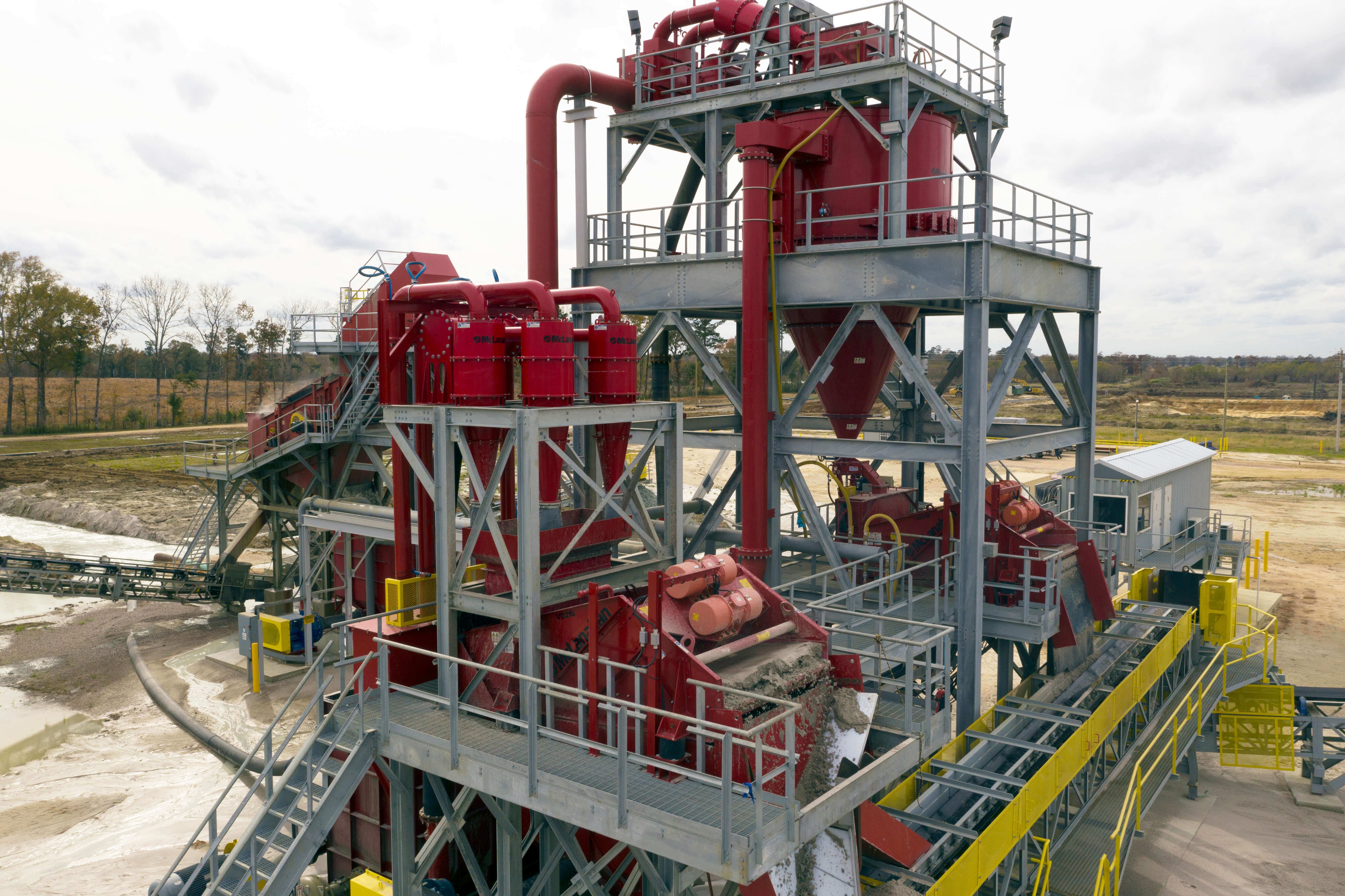
McLanahan Sand Washing Plants
McLanahan Sand Washing Plants
Complete Sand Washing and Classification Solutions
McLanahan Sand Washing Plants are integrated processing systems designed to wash, scrub, classify and dewater sand to produce clean, specification-quality products.
Sand washing is an essential process for removing unwanted clay, silt, dirt, organic material and excess fines from natural or manufactured sand.
A properly designed sand washing plant combines different equipment and processing stages to achieve the required product quality, recovery and moisture content.
McLanahan can provide individual equipment as well as complete washing solutions designed around the characteristics of the feed material and the required final product.
How a Sand Washing Plant Works
The exact process flowsheet depends on the characteristics of the feed material and the required product specification.
A typical sand washing plant may include:
Feeding → Scrubbing → Screening → Classification → Fines Removal → Dewatering → Clean Sand
Water is introduced during the washing process to help loosen and remove clay, dirt and unwanted fine particles.
Depending on the feed material, equipment such as rotary scrubbers, log washers, blade mills, coarse material screw washers, hydrocyclones, hydrosizers and dewatering screens can be incorporated into the plant.
Sand Washing
The washing stage removes unwanted contaminants from the sand particles.
Water and mechanical agitation help separate:
-
Clay
-
Silt
-
Dirt
-
Mud
-
Organic matter
-
Excess fines
-
Surface coatings
The washing intensity and equipment selection depend on how tightly the contaminants are attached to the sand particles.
Scrubbing
Where the feed contains significant amounts of clay or tightly bound contaminants, an additional scrubbing stage may be required.
McLanahan equipment such as rotary scrubbers, log washers and blade mills can provide different levels of mechanical scrubbing depending on the material characteristics.
The objective is to liberate the sand particles from clay and other unwanted materials so they can be efficiently separated in subsequent stages.
Classification
After washing and scrubbing, the material can be classified according to particle size and settling characteristics.
Hydrocyclones and Hydrosizers can be used to separate fine and coarse fractions and control the final product gradation.
Classification can help:
-
Remove unwanted fines
-
Control particle size distribution
-
Improve product consistency
-
Recover usable sand
-
Prepare material for dewatering
Fines Removal
Excessive fine particles can affect the quality and performance of the final sand product.
The washing and classification circuit can remove unwanted clay, silt and fine particles through the process water.
The separated fines can then be directed to a fines management or tailings system.
Sand Recovery
An efficient sand washing plant should maximize the recovery of usable sand while removing unwanted fines.
Proper classification and process-water management can help reduce the loss of valuable sand with the waste stream.
The final recovery depends on:
-
Feed characteristics
-
Particle size distribution
-
Material density
-
Clay content
-
Water flow
-
Classification conditions
-
Equipment configuration
Dewatering
Following washing and classification, the clean sand normally requires dewatering before stockpiling, transportation or final use.
Dewatering equipment removes excess water from the classified sand and produces a more manageable product.
Dewatering screens can be integrated with hydrocyclones and other classification equipment to provide an efficient final sand recovery and dewatering stage.
Water Management
Water is a critical part of a sand washing plant.
An efficient plant should manage water consumption, solids concentration and the recycling of process water.
A complete system may include:
-
Water tanks
-
Slurry pumps
-
Hydrocyclones
-
Fines separation
-
Thickening or clarification systems
-
Water recovery
-
Tailings management
Proper water management can reduce fresh-water consumption and improve overall plant efficiency.
Typical Sand Washing Plant Process
A typical process may be configured as:
Feed Material
↓
Scrubbing / Washing
↓
Screening
↓
Classification
↓
Fine Sand Recovery
↓
Dewatering
↓
Clean Sand Product
↓
Stockpile
The actual process flowsheet should be developed according to the material characteristics and required product specifications.
Applications
McLanahan Sand Washing Plants are suitable for applications including:
-
Natural sand washing
-
Manufactured sand washing
-
Silica sand processing
-
Aggregate washing
-
Quarrying
-
Mining
-
Mineral processing
-
Construction sand production
-
Industrial minerals
-
Clay removal
-
Fines removal
-
Sand classification and recovery
Typical feed materials may include:
-
Natural sand
-
Manufactured sand
-
Silica sand
-
Crushed stone fines
-
Gravel
-
Limestone
-
Quarry materials
-
Mineral-bearing sands
-
Other sand and mineral feed materials
Key Features & Benefits
-
Complete sand washing solutions
-
Effective removal of clay and unwanted fines
-
Mechanical scrubbing for difficult-to-wash materials
-
Accurate wet classification
-
Efficient sand recovery
-
Dewatering of final sand product
-
Improved product consistency
-
Reduced unwanted fines
-
Integrated slurry pumping
-
Process water management
-
Modular equipment configurations
-
Suitable for high-capacity applications
-
Can be designed around specific feed and product requirements
-
Suitable for mining, quarrying and aggregate applications
Factors Affecting Sand Washing Plant Performance
Plant performance depends on several factors, including:
-
Feed capacity
-
Feed particle size distribution
-
Sand content
-
Clay content
-
Silt content
-
Material density
-
Material abrasiveness
-
Feed moisture
-
Water availability
-
Water quality
-
Slurry concentration
-
Required product specification
-
Required product moisture
-
Desired recovery
-
Classification cut size
-
Equipment configuration
-
Process-water recycling
-
Tailings management
Designing the Right Sand Washing Plant
A properly designed sand washing plant should be based on the characteristics of the feed material and the required final products.
Important design information includes:
-
Feed capacity (TPH)
-
Feed particle size distribution
-
Bulk density
-
Sand percentage
-
Clay percentage
-
Silt and fines content
-
Material type
-
Material density
-
Required product sizes
-
Maximum allowable fines
-
Required product moisture
-
Water availability
-
Water recycling requirements
-
Number of final products
-
Available space
-
Downstream equipment
-
Tailings disposal requirements
Material testing may be recommended to determine the optimum washing, classification and recovery process.
Cube Solutions can evaluate your feed material and process requirements and develop the appropriate McLanahan sand washing solution.
McLanahan Sand Washing Plants from Cube Solutions
As a McLanahan agent, Cube Solutions provides complete washing, scrubbing, classification, dewatering, feeding, crushing and screening solutions for customers in Egypt and the region.
Our services include application evaluation, equipment selection, process design support, technical consultation and supply of McLanahan equipment.
Contact Cube Solutions to discuss your sand washing project and determine the most suitable process and equipment configuration for your operation.