
Blade Mills
McLanahan Blade Mills
High-Shear Scrubbing and Slurry Conditioning for Mineral Processing
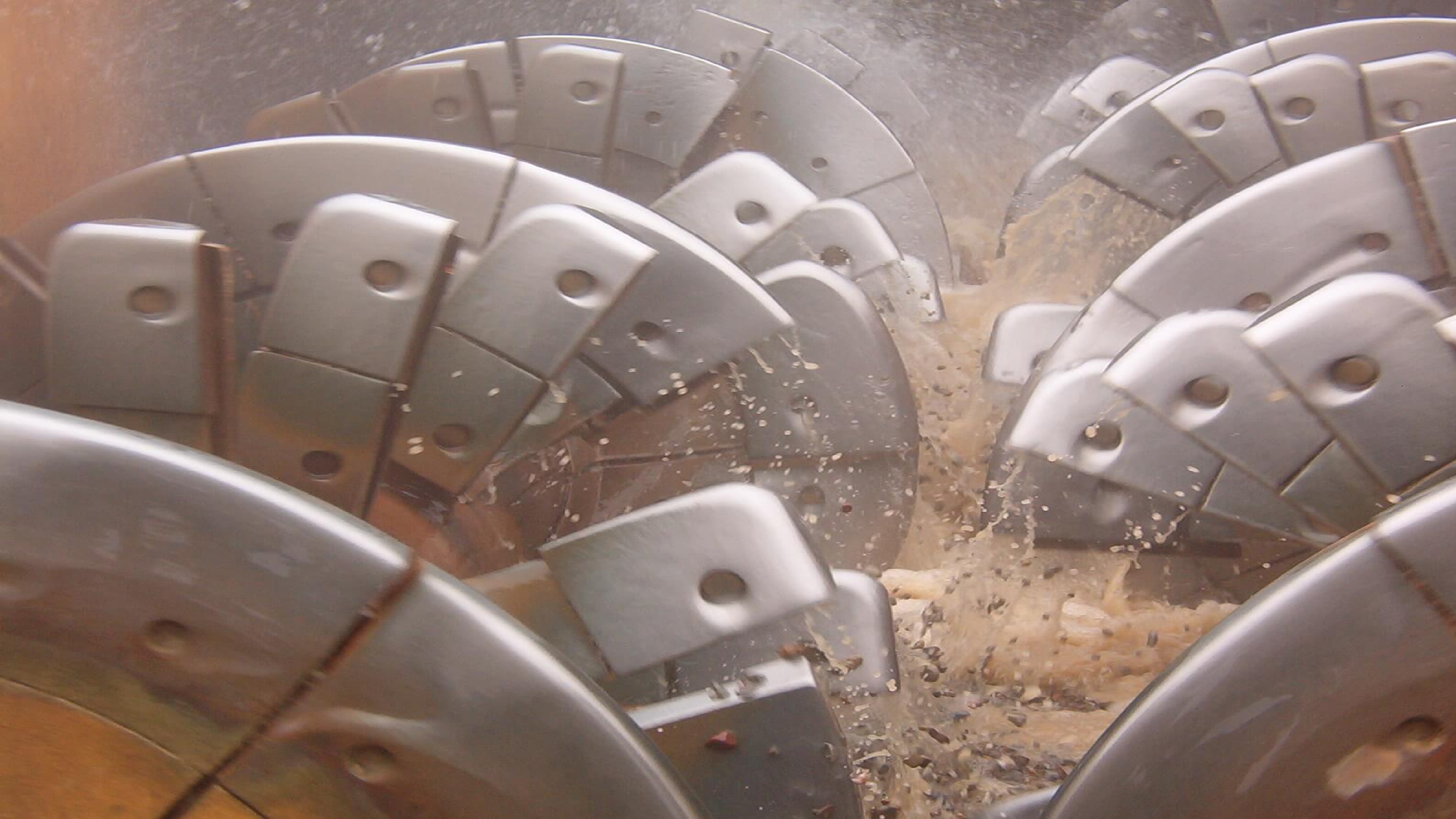
McLanahan Blade Mills are heavy-duty scrubbing machines designed to break down and disperse clay, dirt and other unwanted materials from mineral and aggregate feed.
The high-shear action of the rotating blades provides intensive particle-to-particle scrubbing and helps convert difficult, clay-bound feed materials into a manageable slurry for downstream washing and classification.
Blade Mills are particularly effective for applications where material contains significant amounts of clay or other contaminants that need to be dispersed and removed before further processing.
How McLanahan Blade Mills Work
Feed material and water are introduced into the Blade Mill.
Inside the machine, rotating blades aggressively mix, shear and scrub the material.
The blades create intense agitation that breaks down clay lumps and disperses clay and other unwanted materials throughout the water.
As the material is processed, the combination of mechanical action and water helps separate the undesirable fines and contaminants from the coarser mineral particles.
The resulting slurry can then be discharged for further washing, screening, classification or mineral processing.
The process can be summarized as:
Feeding + High-Shear Scrubbing + Clay Dispersion + Slurry Conditioning
High-Shear Scrubbing Action
The rotating blades provide a high-energy scrubbing action that helps break apart compacted and clay-bound material.
Unlike simple washing systems, Blade Mills are designed to provide intensive mechanical agitation and shearing.
This action is particularly useful when clay is tightly bound to the feed material or when the feed contains hard clay lumps that need to be broken down.
Clay Dispersion
One of the primary applications of Blade Mills is the breakdown and dispersion of clay.
Clay can coat valuable mineral particles, bind aggregate together and interfere with screening and classification.
The high-shear action of the blades helps break down clay masses and disperse the clay into the water.
The dispersed clay and fine particles can then be removed through downstream washing and classification equipment.
Slurry Conditioning
Blade Mills can be used as a conditioning stage to prepare material for downstream processing.
By breaking down clay and mixing the feed with water, the machine helps produce a more uniform slurry.
This can improve the performance of subsequent equipment such as:
-
Screens
-
Hydrocyclones
-
Classifiers
-
Sand processing equipment
-
Gravity separation equipment
-
Magnetic separators
-
Other mineral processing systems
Material Preparation
Blade Mills are especially useful where the feed material contains a combination of coarse particles, clay and water.
The intensive mixing action helps separate the components and prepare the material for the next processing stage.
Depending on the application, a Blade Mill may be installed upstream of a washing and classification circuit.
Applications
McLanahan Blade Mills are suitable for applications including:
-
Mining
-
Mineral processing
-
Aggregate washing
-
Clay removal
-
Ore washing
-
Sand and gravel processing
-
Industrial minerals
-
Material conditioning
-
Slurry preparation
-
Washing and classification
Typical applications may include materials containing:
-
Clay-bound aggregates
-
Clay-contaminated minerals
-
Sand and gravel
-
Crushed stone
-
Industrial minerals
-
Mineral ores
-
Other difficult-to-wash materials
Key Features & Benefits
-
High-shear scrubbing action
-
Intensive mechanical agitation
-
Effective breakdown of clay lumps
-
Helps disperse clay into the wash water
-
Helps separate clay and unwanted fines
-
Conditions material into a slurry
-
Improves feed preparation for downstream equipment
-
Suitable for clay-bound and difficult-to-wash materials
-
Continuous processing
-
Heavy-duty construction
-
Suitable for mining and aggregate applications
-
Can be integrated into complete washing and classification plants
Factors Affecting Blade Mill Performance
Actual capacity and performance depend on several factors, including:
-
Feed rate
-
Feed particle size
-
Material type
-
Bulk density
-
Clay content
-
Clay characteristics
-
Material hardness
-
Material abrasiveness
-
Moisture content
-
Water addition
-
Slurry concentration
-
Blade speed
-
Blade configuration
-
Retention time
-
Required degree of clay dispersion
-
Downstream process requirements
Proper equipment sizing and process design are important to achieve the required scrubbing and slurry conditioning performance.
Selecting the Right Blade Mill
The appropriate Blade Mill should be selected based on:
-
Material type
-
Required capacity (TPH)
-
Maximum feed size
-
Feed gradation
-
Bulk density
-
Clay content
-
Type and characteristics of the clay
-
Material abrasiveness
-
Water availability
-
Required slurry concentration
-
Required degree of scrubbing
-
Downstream washing and classification equipment
-
Overall process flowsheet
Testing may be recommended for applications where clay characteristics or the required degree of dispersion need to be established.
Cube Solutions can evaluate your application requirements and assist in selecting the appropriate McLanahan Blade Mill configuration.
McLanahan Blade Mills from Cube Solutions
As a McLanahan agent, Cube Solutions provides washing, scrubbing, feeding, crushing, screening and mineral processing solutions for customers in Egypt and the region.
Our services include equipment selection, application evaluation, technical support and supply of McLanahan equipment.
Contact Cube Solutions to discuss your Blade Mill application and determine the most suitable configuration for your operation.