
Coarse Material Screw Washers
McLanahan Coarse Material Screw Washers
Efficient Washing, Scrubbing and Classification of Coarse Materials
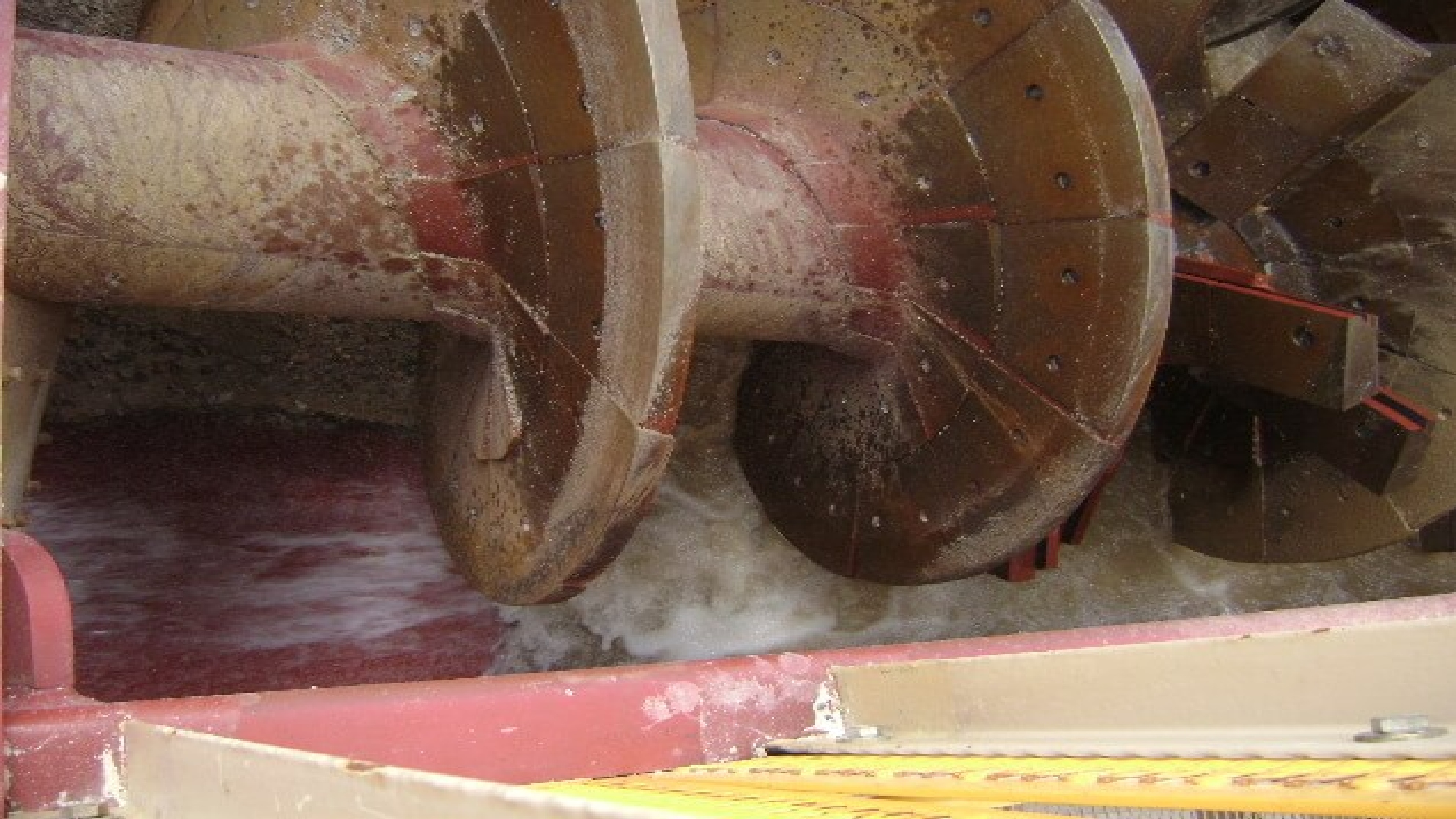
McLanahan Coarse Material Screw Washers are heavy-duty washing machines designed to clean, scrub and classify coarse aggregate and mineral materials.
They combine washing, scrubbing, conveying and classification in a single machine, making them suitable for removing clay, dirt, coatings and unwanted fines from coarse feed materials.
Coarse Material Screw Washers are commonly used in aggregate, quarrying, mining and mineral processing applications where coarse material requires washing and sizing before further processing or final use.
How McLanahan Coarse Material Screw Washers Work
Feed material and water enter the washing chamber.
Inside the machine, one or two rotating screw shafts agitate and move the material through the washer.
The rotating screws provide vigorous scrubbing action, causing the particles to rub against each other and helping to loosen clay, dirt and other unwanted materials.
As the material moves through the washer, the screw flights convey the cleaned coarse material toward the discharge end.
Fine material, clay and other unwanted particles are suspended in the wash water and can be removed separately.
The process can be summarized as:
Feeding + Washing + Scrubbing + Conveying + Classification
Aggressive Washing and Scrubbing
The rotating screw shafts provide continuous agitation and scrubbing of the feed material.
This action helps remove contaminants that are tightly attached to the surface of aggregate and mineral particles.
Coarse Material Screw Washers are particularly effective for materials containing:
-
Clay
-
Dirt
-
Mud
-
Fine particles
-
Surface coatings
-
Organic material
-
Other unwanted contaminants
Removal of Clay and Unwanted Fines
Clay and excessive fines can reduce the quality of aggregate and interfere with downstream processing.
The washing and scrubbing action helps separate these unwanted materials from the coarse product.
The wash water carries the liberated clay and fines away from the coarse material, allowing the cleaned product to be discharged separately.
Coarse Material Classification
In addition to washing, the machine can provide a degree of classification by separating coarse material from finer particles.
The coarse product is conveyed toward the discharge end, while finer material remains suspended in the wash water and can be removed from the washing process.
This makes the Coarse Material Screw Washer useful in applications where washing and coarse material separation are required in the same stage.
Single and Twin Shaft Configurations
Depending on the application, Coarse Material Screw Washers can be configured with one or two screw shafts.
Twin-shaft configurations provide increased material agitation and scrubbing action and can be particularly suitable for difficult-to-wash materials.
The appropriate configuration depends on:
-
Material characteristics
-
Required capacity
-
Feed size
-
Clay content
-
Required washing intensity
-
Product specifications
Applications
McLanahan Coarse Material Screw Washers are suitable for applications including:
-
Aggregate washing
-
Quarrying
-
Mining
-
Mineral processing
-
Sand and gravel processing
-
Clay removal
-
Coarse material washing
-
Material classification
-
Product cleaning
-
Washing and sizing
Typical materials include:
-
Crushed stone
-
Gravel
-
Limestone
-
Granite
-
Sand and gravel
-
Recycled aggregates
-
Mineral ores
-
Clay-contaminated aggregate
-
Other coarse bulk materials
Key Features & Benefits
-
Heavy-duty coarse material washing
-
Effective scrubbing action
-
Helps remove clay, dirt and mud
-
Removes unwanted fines and contaminants
-
Combines washing and conveying
-
Provides coarse material classification
-
Single- or twin-shaft configurations
-
Continuous material movement
-
Suitable for demanding applications
-
Robust construction
-
Suitable for high-capacity operations
-
Can be integrated into complete washing plants
-
Suitable for mining, quarrying and aggregate applications
-
Improves cleanliness and quality of the final product
Factors Affecting Coarse Material Screw Washer Performance
Actual capacity and washing performance depend on several factors, including:
-
Feed rate
-
Feed particle size
-
Material type
-
Bulk density
-
Clay content
-
Material hardness
-
Material abrasiveness
-
Moisture content
-
Water flow rate
-
Slurry concentration
-
Screw speed
-
Screw configuration
-
Retention time
-
Required degree of cleaning
-
Product specifications
Proper equipment sizing, water management and process design are essential for achieving the required washing performance.
Selecting the Right Coarse Material Screw Washer
The appropriate Coarse Material Screw Washer should be selected based on:
-
Material type
-
Required capacity (TPH)
-
Maximum feed size
-
Feed gradation
-
Bulk density
-
Clay content
-
Moisture content
-
Material abrasiveness
-
Required degree of cleaning
-
Water availability
-
Required scrubbing intensity
-
Number of screw shafts
-
Downstream screening and classification equipment
-
Overall process flowsheet
Laboratory or pilot testing may be recommended for applications where material characteristics or washing performance need to be evaluated.
Cube Solutions can evaluate your application requirements and assist in selecting the appropriate McLanahan Coarse Material Screw Washer configuration.
McLanahan Coarse Material Screw Washers from Cube Solutions
As a McLanahan agent, Cube Solutions provides washing, scrubbing, feeding, crushing, screening and mineral processing solutions for customers in Egypt and the region.
Our services include equipment selection, application evaluation, technical support and supply of McLanahan equipment.
Contact Cube Solutions to discuss your Coarse Material Screw Washer application and determine the most suitable configuration for your operation.