
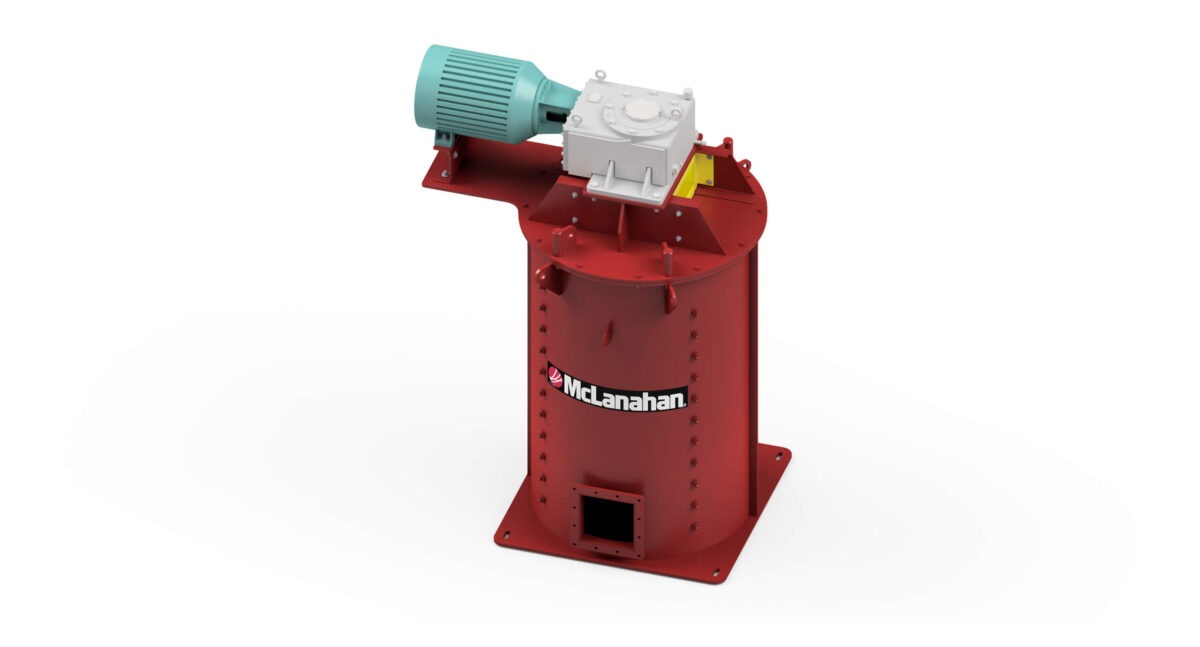
Attrition Scrubbing Cells
McLanahan Attrition Scrubbing Cells
Effective Particle Cleaning and Surface Preparation for Mineral Processing
McLanahan Attrition Scrubbing Cells are mineral processing equipment designed to clean and condition particles through intense particle-to-particle contact.
Attrition scrubbing uses the natural abrasive action between particles to remove unwanted coatings, clay, dirt, oxides and other surface contaminants from the material.
This process helps expose clean mineral surfaces and prepare the material for downstream processing and separation.
Attrition Scrubbing Cells are particularly useful when valuable minerals are coated with fine clay, dirt or other materials that can interfere with subsequent processing stages.
How McLanahan Attrition Scrubbing Cells Work
Feed material and water are introduced into the scrubbing cell.
The cell creates an intense scrubbing environment that promotes particle-to-particle contact.
As particles move and collide with each other, surface coatings and unwanted materials are loosened and removed.
Water helps carry the liberated clay, fines and contaminants away from the cleaned particles.
The scrubbed material can then be discharged for further processing, such as classification, screening, gravity separation, magnetic separation, flotation or other mineral recovery processes.
The process can be summarized as:
Washing + Attrition + Surface Cleaning + Mineral Conditioning
Particle-to-Particle Attrition
The key principle behind attrition scrubbing is friction between individual particles.
Instead of relying only on mechanical contact with a rotating component, the process promotes interaction between the particles themselves.
This intense particle-to-particle action can break down and remove coatings that are tightly attached to the surface of the mineral particles.
The process is particularly effective for materials containing:
-
Clay coatings
-
Dirt
-
Oxides
-
Soft coatings
-
Surface contamination
-
Fine adhering particles
Removing Clay and Surface Contamination
Clay and other fine materials can coat valuable mineral particles and interfere with downstream separation.
Attrition scrubbing helps remove these coatings and liberate the mineral surfaces.
This can improve the effectiveness of subsequent processing stages by providing cleaner and better-conditioned particles.
Mineral Conditioning
Attrition scrubbing can also serve as a conditioning stage before downstream mineral processing.
After scrubbing, the material may be easier to classify, screen or separate because unwanted surface coatings have been removed.
Depending on the application, the scrubbed material can be directed to:
-
Hydrocyclones
-
Screens
-
Classifiers
-
Gravity separators
-
Magnetic separators
-
Flotation circuits
-
Other mineral processing equipment
Water and Slurry Processing
Water is an important part of the attrition scrubbing process.
The feed material is mixed with water to create a slurry, allowing the particles to move and interact effectively.
The water also assists in transporting liberated clay, fines and other contaminants away from the cleaned mineral particles.
The required water addition depends on the material characteristics and process requirements.
Applications
McLanahan Attrition Scrubbing Cells are suitable for applications including:
-
Mineral processing
-
Ore washing
-
Clay removal
-
Surface cleaning
-
Mineral liberation
-
Feed preparation
-
Sand processing
-
Silica sand processing
-
Glass sand preparation
-
Industrial minerals
-
Aggregate washing
-
Other applications requiring particle surface cleaning
Typical materials may include:
-
Silica sand
-
Industrial minerals
-
Mineral ores
-
Sand
-
Aggregates
-
Clay-coated minerals
-
Other materials requiring surface cleaning
Key Features & Benefits
-
Intense particle-to-particle scrubbing
-
Effective removal of clay and surface coatings
-
Cleans mineral particle surfaces
-
Helps improve mineral liberation
-
Conditions material for downstream processing
-
Can improve subsequent classification and separation
-
Uses water to assist contaminant removal
-
Suitable for slurry-based processing
-
Suitable for a wide range of mineral applications
-
Can be integrated into complete washing and mineral processing plants
-
Robust design for demanding applications
-
Continuous processing capability
Factors Affecting Attrition Scrubbing Performance
Actual scrubbing performance depends on several factors, including:
-
Material type
-
Feed particle size
-
Clay content
-
Type and strength of surface coatings
-
Material hardness
-
Feed concentration
-
Slurry density
-
Water addition
-
Retention time
-
Scrubbing intensity
-
Feed rate
-
Cell configuration
-
Downstream process requirements
Proper evaluation of the feed material is important to determine the appropriate scrubbing conditions.
Selecting the Right Attrition Scrubbing Cell
The appropriate Attrition Scrubbing Cell configuration should be selected based on:
-
Material type
-
Required capacity (TPH)
-
Feed particle size
-
Bulk density
-
Clay content
-
Surface contamination
-
Required degree of cleaning
-
Slurry density
-
Water availability
-
Required retention time
-
Downstream equipment
-
Overall process flowsheet
Laboratory or pilot testing may be recommended for applications where the required level of cleaning or mineral liberation needs to be established.
Cube Solutions can evaluate your application requirements and assist in selecting the appropriate McLanahan Attrition Scrubbing Cell configuration.
McLanahan Attrition Scrubbing Cells from Cube Solutions
As a McLanahan agent, Cube Solutions provides washing, scrubbing, feeding, crushing and mineral processing solutions for customers in Egypt and the region.
Our services include equipment selection, application evaluation, technical support and supply of McLanahan equipment.
Contact Cube Solutions to discuss your Attrition Scrubbing application and determine the most suitable configuration for your operation.