
McLanahan Apron Feeders
McLanahan Apron Feeders
Heavy-Duty Material Feeding for Mining and Mineral Processing
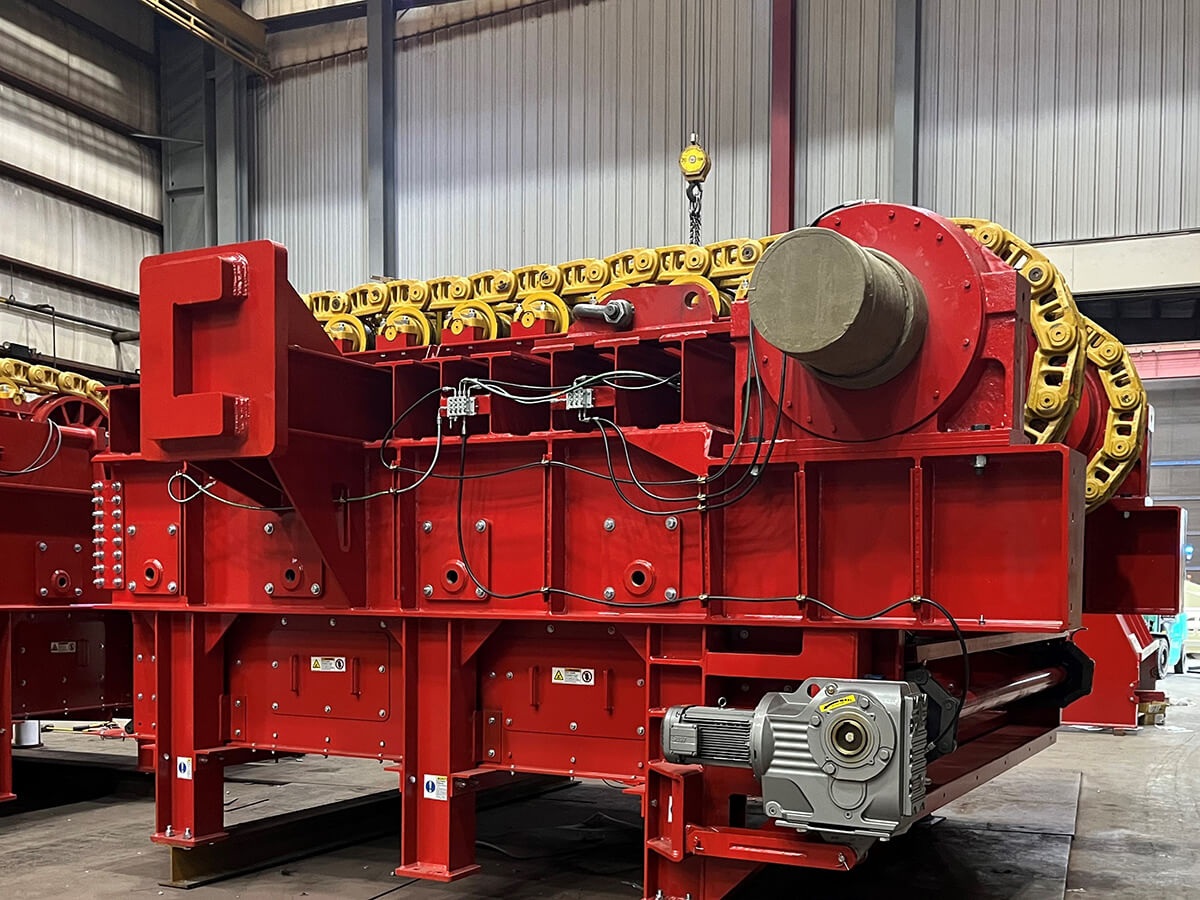
McLanahan Apron Feeders are heavy-duty feeding machines designed to provide a controlled and consistent flow of large, heavy and abrasive materials to downstream equipment.
Apron Feeders are particularly well suited for demanding mining and mineral processing applications where conventional belt or vibrating feeders may not be suitable for handling large lumps, high-impact loading or severe operating conditions.
They are commonly installed upstream of primary crushers, screens, conveyors and other processing equipment to regulate material flow and provide reliable feed under demanding conditions.
How McLanahan Apron Feeders Work
Material is loaded onto a series of overlapping steel pans or flights that form the conveying surface of the feeder.
The pans are connected to heavy-duty chains that travel continuously around the feeder.
A drive system rotates the sprockets, causing the chains and pans to move forward and carry the material toward the discharge point.
The speed of the feeder controls the rate at which material is delivered to the downstream equipment.
Because the material is carried on steel pans rather than a flexible belt, Apron Feeders can handle large rocks, heavy loads and severe impact conditions.
Controlled and Consistent Material Flow
One of the primary functions of an Apron Feeder is to regulate material flow.
By controlling feeder speed, the operator can adjust the feed rate to match the capacity of the downstream crusher, conveyor or processing equipment.
This provides a steady and controlled feed, helping to prevent equipment overloads and maintain stable operation throughout the processing circuit.
Handling Large and Abrasive Materials
Apron Feeders are designed to handle materials that can be too large, heavy or abrasive for conventional feeding equipment.
The heavy-duty steel pans provide a durable conveying surface capable of receiving material directly from haul trucks, loaders, hoppers or stockpiles.
They are particularly useful where the feed contains large lumps or where significant impact occurs during loading.
Primary Crusher Feed
Apron Feeders are commonly used to feed primary crushers.
In a typical mining application, ROM material is loaded onto the feeder and transported at a controlled rate toward the primary crusher.
The feeder can help regulate the crusher feed and provide a consistent material flow, improving the overall stability of the crushing circuit.
Depending on the application, an Apron Feeder can also be equipped with a grizzly or scalping arrangement to remove smaller material before it reaches the crusher.
Standard-Duty and Heavy-Duty Configurations
McLanahan Apron Feeders are available in different configurations to meet application requirements.
Standard-Duty Apron Feeders are suitable for applications where the material and loading conditions are less severe.
Heavy-Duty Apron Feeders are designed for demanding applications involving larger material, higher loading impact and heavier operating conditions.
The appropriate feeder configuration is selected according to the material characteristics, capacity, lump size and loading conditions.
Applications
McLanahan Apron Feeders are suitable for a wide range of applications, including:
-
Mining
-
Mineral processing
-
Aggregate processing
-
Quarrying
-
Primary crusher feeding
-
ROM material handling
-
Stockpile reclaim
-
Hopper discharge
-
Material transfer
-
Heavy-duty material handling
Typical materials include:
-
Iron ore
-
Copper ore
-
Gold ore
-
Limestone
-
Coal
-
Phosphate rock
-
Aggregates
-
Hard rock
-
Other heavy and abrasive materials
Key Features & Benefits
-
Heavy-duty material handling
-
Controlled and consistent feed rate
-
Designed for large and heavy material
-
Steel pan conveying surface
-
High-impact loading capability
-
Suitable for abrasive materials
-
Robust chain and sprocket drive system
-
Suitable for primary crusher feeding
-
Standard-Duty and Heavy-Duty configurations
-
Can be equipped with grizzly or scalping sections
-
Suitable for high-capacity applications
-
Can handle severe operating conditions
-
Reliable operation in demanding mining environments
-
Designed for maintenance access and long service life
Factors Affecting Apron Feeder Performance
Actual feeder capacity and performance depend on several factors, including:
-
Material type
-
Bulk density
-
Maximum lump size
-
Feed gradation
-
Material hardness
-
Abrasiveness
-
Moisture content
-
Required feed rate
-
Feeder speed
-
Feeder dimensions
-
Hopper geometry
-
Loading conditions
-
Installed power
Proper hopper design and controlled material loading are important for achieving consistent feeder performance.
Selecting the Right Apron Feeder
The appropriate Apron Feeder should be selected based on:
-
Material type
-
Maximum lump size
-
Required capacity (TPH)
-
Bulk density
-
Material hardness
-
Abrasiveness
-
Moisture content
-
Hopper capacity
-
Loading method
-
Required feeder length
-
Required feeder width
-
Downstream equipment
-
Operating conditions
Cube Solutions can evaluate your application requirements and assist in selecting the appropriate McLanahan Apron Feeder configuration.
McLanahan Apron Feeders from Cube Solutions
As a McLanahan agent, Cube Solutions provides feeding, crushing and mineral processing solutions for customers in Egypt and the region.
Our services include equipment selection, application evaluation, technical support and supply of McLanahan equipment.
Contact Cube Solutions to discuss your Apron Feeder application and determine the most suitable configuration for your operation.