
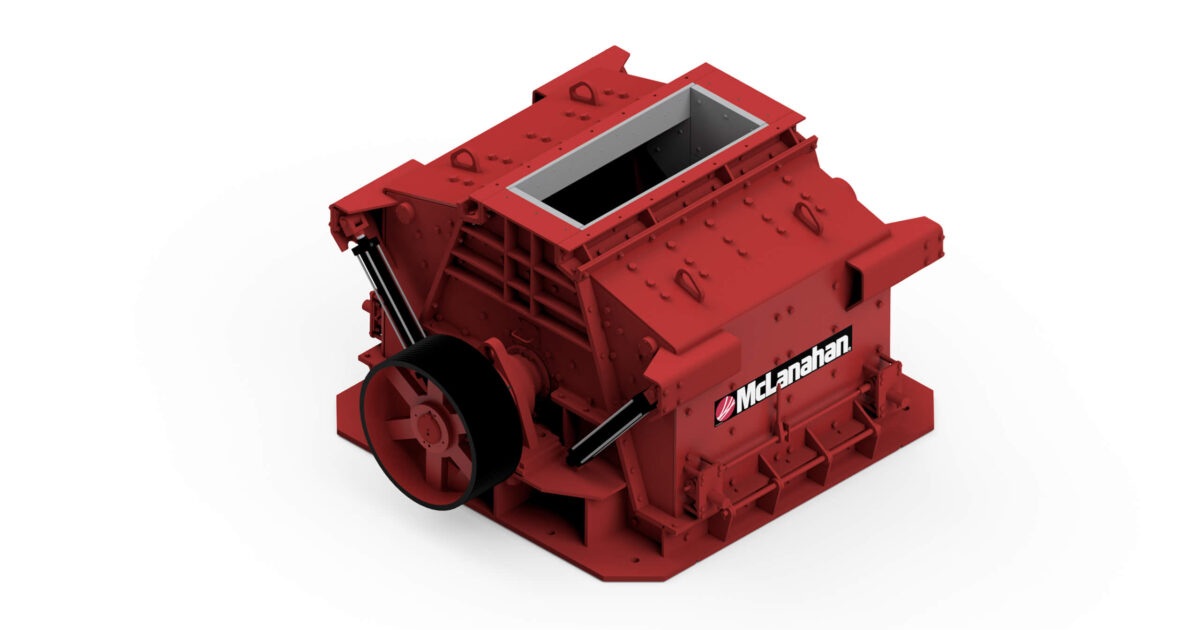
McLanahan Hammermills
McLanahan Hammermills
High-Reduction Crushing for Mining, Aggregates and Mineral Processing
McLanahan Hammermills are high-speed impact crushers designed to reduce a wide range of friable materials through repeated impact.
The combination of high rotor speed, swinging or fixed hammers and replaceable breaker plates enables Hammermills to achieve significant size reduction in a single stage. They are suitable for primary, secondary and tertiary crushing applications, depending on the model, configuration and material being processed.
Hammermills are particularly effective for materials that are relatively soft to moderately hard and where a high reduction ratio and controlled product sizing are required.
How McLanahan Hammermills Work
Material enters the Hammermill through the feed opening and is directed into the crushing chamber.
A high-speed rotor equipped with hammers rotates inside the chamber. As the rotor turns, the hammers strike the incoming material with high impact energy.
The material is repeatedly impacted by the hammers and thrown against breaker plates or other internal crushing surfaces. This repeated impact progressively reduces the material size.
Once the particles are small enough to pass through the selected discharge opening or grate arrangement, they leave the crusher.
High Reduction in a Single Stage
One of the main advantages of Hammermills is their ability to achieve substantial size reduction in a single crushing stage.
The high-speed impact action can reduce relatively large feed material to a much smaller product while maintaining a compact crushing circuit.
The achievable reduction ratio and final product size depend on the material characteristics, feed size, rotor speed, hammer configuration, breaker setting and other operating conditions.
Product Size Control
Product sizing can be controlled through the crusher configuration and discharge arrangement.
Depending on the model, product size can be influenced by:
-
Breaker plate position
-
Grate configuration
-
Crusher setting
-
Hammer configuration
-
Rotor speed
-
Feed characteristics
A finer setting generally produces a finer product, while a more open setting allows a coarser product and can increase throughput.
Hammer and Wear Components
The hammers are the primary impact components responsible for transferring energy to the feed material.
Because these components are exposed to continuous impact and abrasion, they are designed as replaceable wear parts.
McLanahan offers different hammer and wear configurations to suit various materials and applications.
The correct wear material should be selected based on the hardness, abrasiveness and characteristics of the feed material.
Applications
McLanahan Hammermills can be used in a variety of applications, including:
-
Mining
-
Mineral processing
-
Aggregates
-
Quarrying
-
Limestone crushing
-
Coal
-
Salt
-
Gypsum
-
Phosphate
-
Glass recycling
-
Construction materials
-
Secondary crushing
-
Tertiary crushing
Typical materials include:
-
Limestone
-
Coal
-
Salt
-
Gypsum
-
Phosphate rock
-
Soft and moderately hard minerals
-
Other friable materials
Application suitability depends on the material's hardness, abrasiveness, moisture, feed size and other characteristics.
Key Features & Benefits
-
High-speed impact crushing
-
High reduction capability
-
Primary, secondary and tertiary crushing options
-
Compact crushing circuit
-
Replaceable hammers and wear components
-
Adjustable breaker plates on selected models
-
Multiple grate and discharge configurations
-
Controlled product sizing
-
Suitable for a wide range of friable materials
-
Robust construction for demanding applications
-
Can be integrated into complete crushing and screening plants
-
Designed for reliable operation and simplified maintenance
Factors Affecting Hammermill Performance
Actual capacity, reduction ratio and product gradation depend on several factors, including:
-
Feed size
-
Feed gradation
-
Material hardness
-
Material abrasiveness
-
Moisture content
-
Bulk density
-
Rotor speed
-
Hammer configuration
-
Breaker plate setting
-
Grate configuration
-
Installed power
-
Feeding method
Consistent feed distribution and operating the Hammermill within its recommended application range are important for achieving stable performance and predictable wear.
Selecting the Right Hammermill
The appropriate Hammermill should be selected based on the complete application requirements, including:
-
Material type
-
Maximum feed size
-
Required product size
-
Required capacity (TPH)
-
Material hardness
-
Abrasiveness
-
Moisture content
-
Bulk density
-
Required reduction ratio
-
Crushing stage
-
Installation arrangement
Cube Solutions can evaluate your application requirements and assist in selecting the appropriate McLanahan Hammermill configuration.
McLanahan Hammermills from Cube Solutions
As a McLanahan agent, Cube Solutions provides crushing and mineral processing solutions for customers in Egypt and the region.
Our services include equipment selection, application evaluation, technical support and supply of McLanahan equipment.
Contact Cube Solutions to discuss your Hammermill application and determine the most suitable configuration for your operation.